The co-management model is often seen as a way to align incentives between physicians and hospitals, as both parties share in the financial and operational success of the specialty service line. In these arrangements, everyone can work in harmony to improve patient outcomes, increase efficiency, and reduce costs through shared decision-making and the integration of clinical expertise and facility competence.
By implementing the proper structure, a service line co-management arrangement can allow physicians to partner with hospital leadership in managing the clinical operations, business development, and quality improvement aspects of the service line and be appropriately compensated.
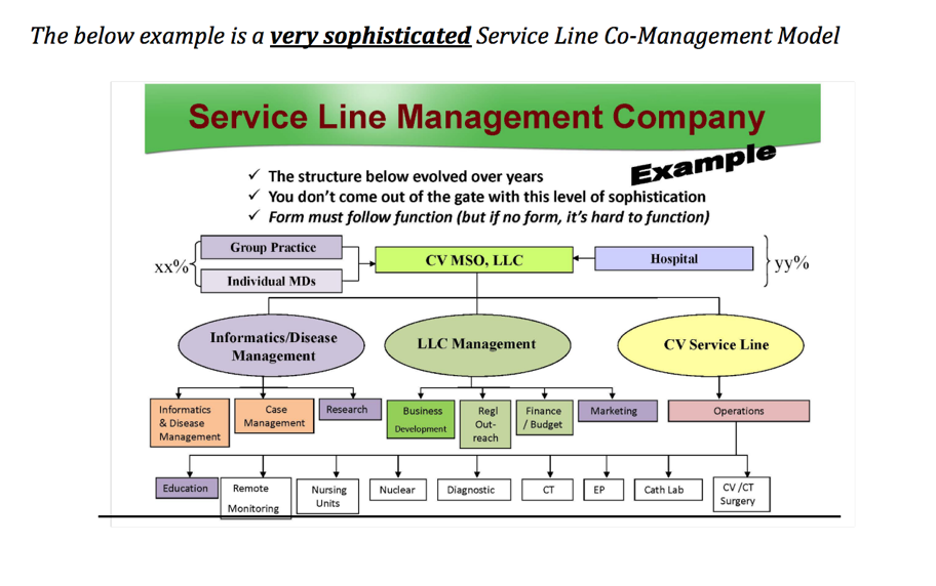
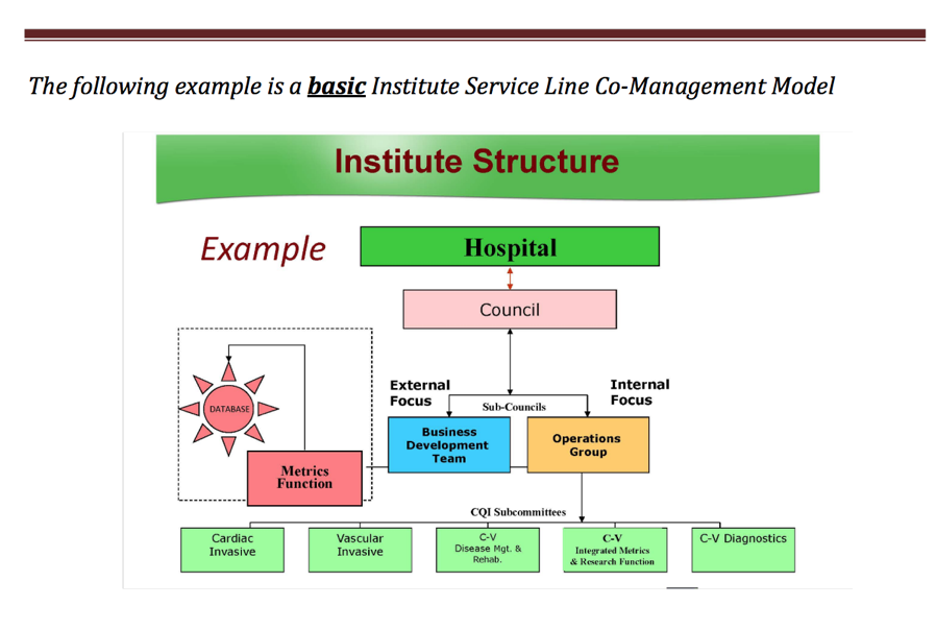
The hospital can provide the facilities and support services, such as IT, data analysis, marketing, and human resources, as necessary. The physicians, meanwhile, can be responsible for providing medical oversight and other aspects of co-management, including clinical medical directors, strategic planning, bringing new physicians to grow the program, development of “through-put” processes, development of clinical protocols and equipment/materials management insights.
These agreements, when handled correctly, work to align the goals of all parties. Physicians take an active role in the management of clinical operations, while hospitals provide the necessary resources and support. Both share the responsibilities of management, as well as the financial rewards of improved performance.